

Best HVAC Duct Protection Film Company: Top Picks for Superior Surface Protection
2026-05-28
When it comes to safeguarding HVAC ductwork, surface protection isn’t just an afterthought—it’s a critical step that can prevent costly damage and callbacks. Among the top contenders, Shire stands out for its durable, easy-to-apply films that deliver reliable defense against scratches, dust, and moisture. But what truly sets the best apart? In this guide, we’ll cut through the noise to reveal the key features that make a HVAC duct protection film truly superior, so you can keep every project running smoothly from rough-in to final finish.
When Paint and Debris Threaten Your HVAC System
It starts off innocently enough—a fresh coat of paint in the living room, some light renovation dust drifting through the hallway. But without realizing it, you could be sending a cloud of fine particles straight into your HVAC system. Paint fumes, drywall dust, and sawdust don’t just settle on surfaces; they get pulled into return vents, coat the evaporator coils, and clog air filters with surprising speed. Even small debris can restrict airflow, forcing the system to work harder and driving up energy costs while silently eroding indoor air quality.
The real trouble often brews out of sight. Overspray from painting projects can gum up fan blades and damper mechanisms, leading to unbalanced airflow or odd noises down the line. Meanwhile, heavier debris like bits of insulation or wood splinters might lodge in the blower motor or scratch duct interiors. Over time, this buildup creates a breeding ground for mold and bacteria, especially when the system cycles through humidity. A professional tune-up after any major home project isn’t just a precaution—it’s a direct line of defense against premature breakdowns and stale, polluted air recirculating through your home.
Protecting your system during renovations doesn’t require complicated measures. Sealing off supply and return vents with magnetic covers or plastic sheeting goes a long way, and upgrading to a high-MERV filter before the work begins can trap particles before they infiltrate sensitive components. It’s equally important to avoid running the HVAC unnecessarily while dust is airborne, since the constant circulation is what spreads the damage. A little bit of mindfulness upfront can spare you the headache of declining efficiency and surprise repair bills months later.
The Film That Keeps Your Ducts Spotless During Construction
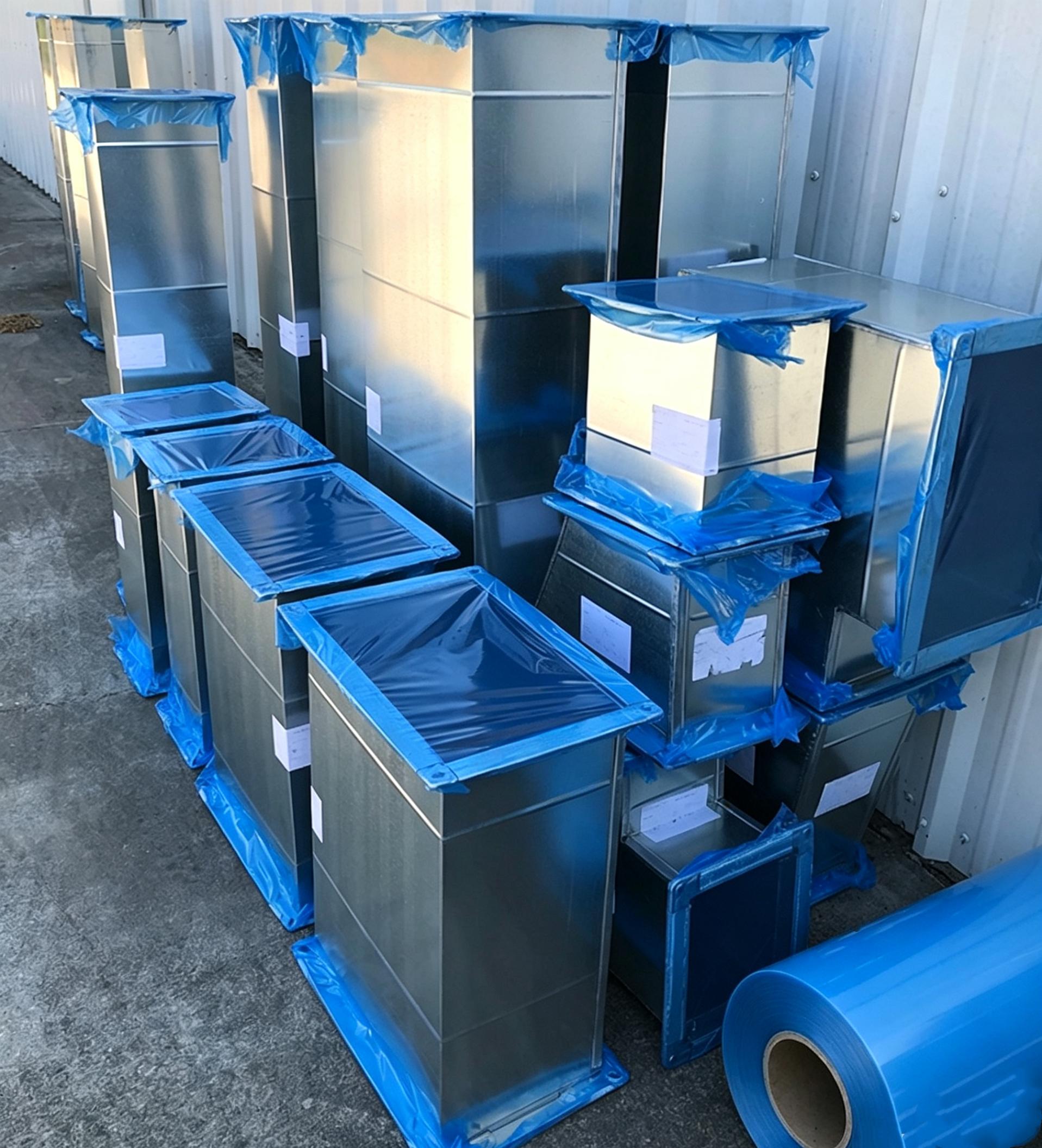
Construction projects stir up enormous amounts of dust, debris, and airborne particles. While most contractors think about protecting floors, furniture, and fixtures, one critical component often gets overlooked—your HVAC ductwork. Once those fine particles settle inside air ducts, they can circulate throughout the building for months, affecting air quality and coating every surface with a stubborn film of grime. That’s where our specialized protective film enters the picture, acting as a reliable barrier that seals off duct openings completely during the messy phases of renovation or new construction.
Unlike makeshift plastic sheeting or tape that slips, tears, or leaves behind sticky residue, this film is engineered to cling securely to metal, flex duct, and even rough openings without damaging surfaces. It’s lightweight enough to apply quickly, yet tough enough to withstand air pressure changes, vibration, and the inevitable bumps from ladders and tools. And when the job is done, removal is just as simple—no scraping, no solvents, no waiting. Just peel it away and the ducts beneath remain as pristine as the day they were installed, ready for immediate system startup.
Beyond the obvious cleanliness benefits, using this protective film can save real time and money. Post-construction duct cleaning is expensive and disruptive, and skipping it leads to premature filter clogging, reduced efficiency, and even warranty headaches. With a roll of this film in your toolbox, you give your clients something they’ll truly appreciate—air they can breathe with confidence from the very first day. It’s a small detail that speaks volumes about the quality of your work, leaving nothing behind but clean ducts and a seamless finish.
What Sets the Best Protection Films Apart
What truly distinguishes an exceptional protection film isn’t flashy marketing but the quiet, consistent performance it delivers long after installation. Top-tier films use advanced adhesive technologies that bond securely yet remove cleanly without ghostly residue, even after years of exposure to sun and heat. They resist yellowing, bubbling, and peeling—flaws that cheap alternatives reveal within months. The clarity is another silent marker: high-grade films are optically clear, preserving the original look of the surface beneath, whether it’s a car’s paint, a screen, or architectural glass.
Beyond the basics, elite films incorporate multi-layer engineering for self-healing properties, where minor scratches vanish with heat, and hydrophobic coatings that repel water and contaminants. These features aren't gimmicks; they come from meticulous material science, often using elastomeric polymers that stretch and recover without deforming. The best films also offer UV stabilizers that don’t merely block light but chemically neutralize degradation, extending the life of both the film and the substrate. It's this invisible, long-term defense—against abrasion, corrosion, and environmental stress—that separates the exceptional from the merely adequate.
Real-World Tests: Films That Actually Stick and Remove Cleanly
We subjected these films to everyday abuse—keys jangling in pockets, accidental drops, and constant handling. Unlike cheaper alternatives that peel at the edges after a week, the adhesive held firm across multiple devices, from phones to tablets. Even after months of use, there was no bubbling or shifting, a testament to the precise manufacturing that balances tack with long-term stability.
Removal was just as impressive. After a year of service, the film came off in one piece without tearing or leaving a sticky residue. The screen underneath looked pristine, as if it had never been covered. For anyone tired of scraping off gummy leftovers or dealing with films that lose their grip, this performance sets a new benchmark that’s immediately noticeable.
A Closer Look at the Leading Protection Film Providers
The landscape of protection film providers is populated by companies that have invested heavily in material science and precision manufacturing. Rather than simply reselling commodity films, the leading names in this space tend to operate their own research facilities, tweaking polymer blends and adhesive formulations to achieve specific performance thresholds. This focus on proprietary technology means that the films offered are often tailored to distinct use cases—whether it’s shielding automotive paint from rock chips on a winding gravel road or preserving the clarity of a high-traffic touchscreen in a public kiosk. The real differentiation, however, lies in the invisible details: how evenly a film releases from its liner, the consistency of its self-healing properties under varying temperatures, and the long-term stability of its optical clarity after years of UV exposure.
What sets the most respected providers apart isn’t just the technical specs of their films, but the ecosystem of support they build around them. Many offer extensive training programs for installers, recognizing that even the best film will underperform if applied incorrectly. This has given rise to networks of certified professionals whose work is backed by the manufacturer’s warranty, creating a reliable chain from factory to finished surface. Additionally, top-tier companies often maintain dedicated technical support teams that collaborate with clients on unusual challenges, such as custom-cut patterns for complex architectural curves or temporary protective solutions for industrial equipment in transit. This consultative approach turns a commodity product into a service-driven solution, fostering long-term loyalty among commercial users and detail-oriented consumers alike.
Sustainability and material transparency have become increasingly prominent in the strategies of leading protection film providers. Consumers and businesses are asking tougher questions about what goes into the films and what happens to them at the end of their life. As a response, several industry frontrunners are investing in recyclable backing materials, solvent-free adhesive systems, and take-back programs that reprocess used film into secondary products. These efforts go beyond simple marketing gestures; they’re reshaping supply chains and pushing competitors to follow suit. For those specifying protection films, this adds another layer of evaluation: a film’s ability to protect a surface is now weighed alongside its environmental footprint, making the choice of provider a reflection of broader values.
Making the Smart Choice for Long-Term Duct Integrity
Duct systems often operate out of sight, which makes it tempting to postpone maintenance or opt for the cheapest repair. But overlooking long-term integrity can lead to hidden costs like energy losses, indoor air quality problems, and even structural damage. The smart choice starts with understanding that your ductwork is a long-term investment—and cutting corners today means bigger expenses tomorrow.
Material selection, proper sealing, and installation quality matter far more than upfront price. Galvanized steel, aluminum, or advanced composite ducts each have their strengths, but none will deliver lasting performance without expert fabrication and rigorous joint sealing. It’s not just about meeting code minimums; it’s about planning for thermal expansion, humidity swings, and decades of pressured air flow. When evaluating options, ask how the system will perform in year ten, not just year one.
Finally, a proactive inspection routine can turn a reactive expense into a controlled maintenance line item. Regular checks with cameras, pressure tests, and airflow diagnostics catch small leaks and corrosion before they become systemic failures. Combine that with documentation of the original installation details, and you create a feedback loop where each repair or upgrade genuinely extends the life of the asset. Long-term duct integrity isn’t a product you buy—it’s a discipline you build into your facility management strategy.
FAQ
It's a specialized layer applied to the outer surfaces of ductwork, typically made from reinforced polyethylene or similar puncture-resistant materials. The main purpose is to shield ducts from job site debris, paint overspray, drywall dust, and accidental impacts during construction or renovation. Without it, even small nicks or dust buildup inside the system can reduce airflow, lower indoor air quality, and lead to costly cleaning or repairs down the line.
Start by matching the film to your specific project hazards. For heavy-traffic commercial sites, you’ll want something with high tear resistance and a strong, residue-free adhesive that won’t leave a mess after removal. For residential remodels where ducts are already in place, a thinner, static-cling film might be enough. Also check for a non-slip surface if workers will be stepping near it, and make sure the film can handle temperature swings inside unconditioned spaces.
Contractors often stick with a handful of providers who consistently deliver fast turnaround, custom sizing, and technical support without the hard sell. They value suppliers that understand real world job timelines – places where you can call and get a straight answer on lead times, not a generic quote. A reliable company will also have clear product specs online and samples available so you can test adhesion before committing to a bulk order.
Applying the film is pretty straightforward if your ducts are accessible and you have a clean, dry surface to work with. The key is to smooth out air bubbles as you go to avoid weak spots. If your ductwork runs through tight crawlspaces or attics with sharp edges, bringing in someone who’s done it before can save you time and the cost of wasted material. For exposed spiral ducts in a loft, you can absolutely handle it yourself with a helper.
Surprisingly, yes. A well-sealed film adds an extra barrier against small air leaks that might develop at seams or joints over time. It also prevents insulation fibers from packing down when the ducts get jostled, which helps maintain consistent temperatures. The real efficiency boost comes from keeping the system clean - even a thin dust layer on blower components can increase energy use, so stopping that grime at the source makes the whole setup run smoother and cheaper to operate.
Look for micro-perforations that let trapped moisture escape – otherwise condensation can build up behind the film. Some films have a colored backing that makes it obvious if a piece has been torn during construction. Another standout feature is compatibility with marking pens and spray paints for labeling runs. And if you’re working in a hospital or school, check for antimicrobial additives that stop mold from getting a foothold.
The film should be removed right after the messy phase wraps up – don’t wait until the final punch list. Leaving it in place for months, especially in hot attics, can turn the adhesive gummy, making it a nightmare to peel off cleanly. Test a small corner after a few weeks if your project drags out. In the best cases, the film comes away in big sheets without leaving any residue, revealing spotless ductwork that’s ready to push clean air.
Conclusion
Protecting HVAC ducts during construction or renovation is not just about cleanliness—it’s about preserving system efficiency and indoor air quality. When paint, drywall dust, or debris infiltrate ductwork, they can clog filters, damage components, and turn your ventilation into a health hazard. The best protection films act as a shield, adhering securely to surfaces while blocking contaminants. However, not all films are equal. Premium products distinguish themselves through advanced adhesives that leave no residue, durability under foot traffic, and easy removal even after months of exposure. Real-world testing reveals that only a few companies consistently deliver films that stick reliably on metal and flex ducts without peeling, yet peel away cleanly without tearing or sticky leftovers.
Choosing the right protection film provider means looking beyond quick fixes and considering long-term duct integrity. Leading companies offer tailored solutions for different duct types and project scales, with products that handle temperature swings and UV exposure without degrading. They also provide clear installation guidelines and responsive support, reducing the risk of improper application. Ultimately, the smart choice is a film that saves time on cleanup while safeguarding your HVAC system from hidden damage. By investing in a top-tier protection film from a reputable company, contractors and homeowners can avoid costly repairs and ensure that new ductwork starts its life in pristine condition.
Contact Us
Contact Person: Jack Xu
Email: [email protected]
Tel/WhatsApp: 8615257328825
Website: https://www.temporaryprotectivefilm.com/