

Aluminum Work Boat Supplier: Expert Guide to Choosing Durable Workboats
2026-08-03
When your operations depend on a reliable workboat, cutting corners isn't an option. Aluminum workboats offer unmatched durability and low maintenance, but finding the right supplier makes all the difference. As a trusted name in the industry, Allheart has helped countless professionals choose vessels that stand up to the toughest conditions. In this guide, we'll walk you through the key factors to consider, from hull design to custom options, so you can invest with confidence.
Why Aluminum Stands Out for Heavy-Duty Marine Tasks
Aluminum’s natural resistance to corrosion makes it a top contender for demanding marine work. Unlike steel, which needs coatings that wear off over time, aluminum forms its own protective oxide layer when exposed to saltwater. This self-healing barrier fends off pitting and rust, reducing maintenance needs and extending service life. For heavy-duty tasks where downtime isn’t an option, that reliability is hard to beat.
Another reason aluminum shines is its weight, or lack thereof. It delivers a strength-to-weight ratio that steel simply can’t match, allowing for beefier structural components without the dead weight. That translates into better fuel efficiency, higher payload capacity, and easier handling when you’re maneuvering under load. In rough seas, the lighter mass also means less strain on winches, davits, and other gear, which adds up to safer, more responsive operations.
Beyond corrosion and weight, aluminum’s ductility brings a practical edge to marine applications. It absorbs impacts without fracturing—think accidental bumps against pilings or floating debris—so you’re less likely to face sudden, catastrophic failures. Fabricators also appreciate how easily it extrudes and welds, which cuts build times and opens the door for custom shapes that fit tight engine rooms or deck layouts. Over the long haul, those fabrication savings and reduced upkeep lower the total cost of ownership, making aluminum a smarter investment for serious marine work.
Key Design Features That Define a Reliable Workboat
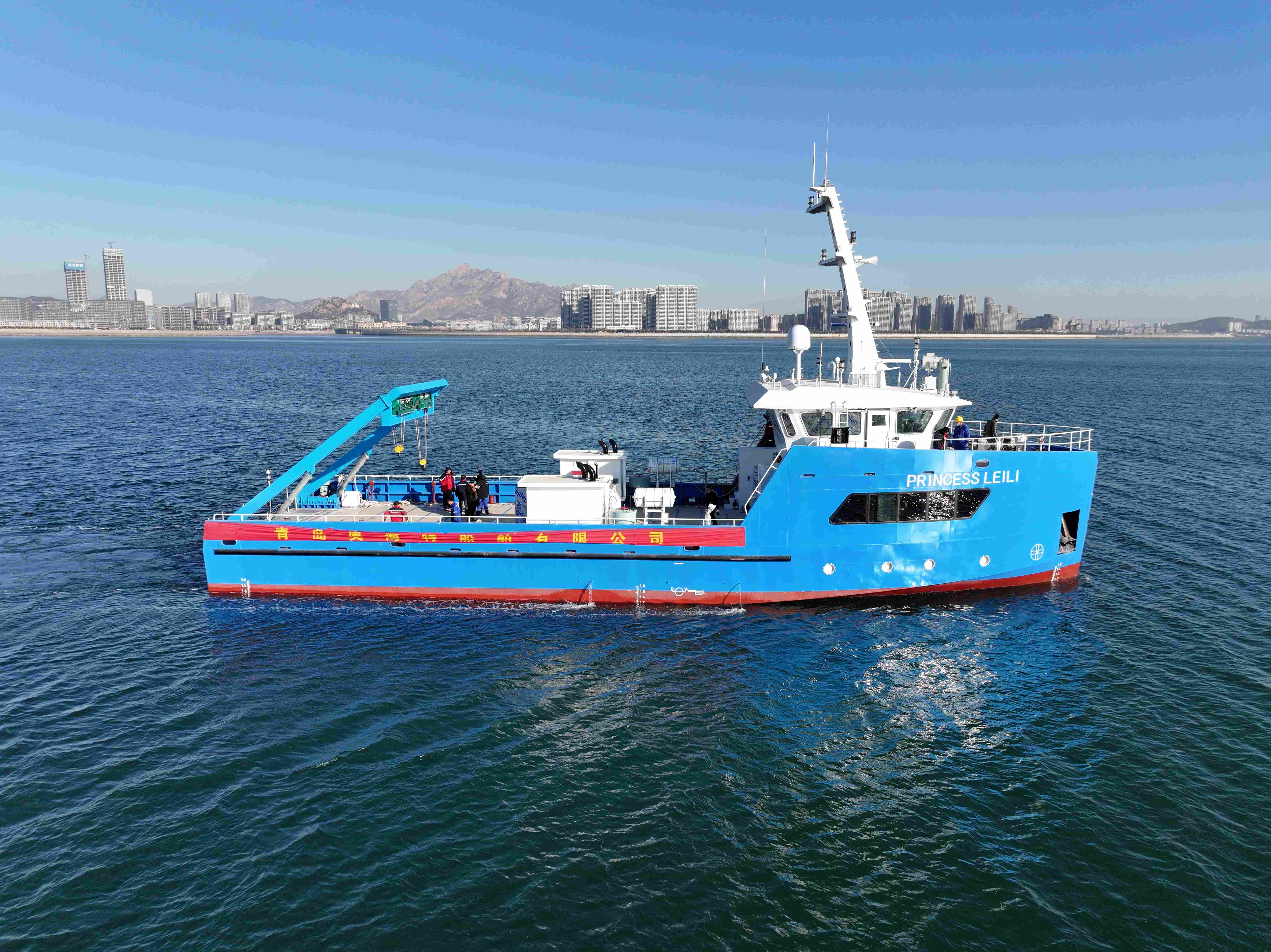
A hull built for punishment is the first thing you notice on a dependable workboat. Deep-V shapes with a sharp entry and wide chines soften the slam when you're running into a head sea, while a slight reverse curve at the stern keeps the deck dry and bite in a turn. It's not about top speed—it's about keeping way on when the weather turns, without the crew needing neck braces. Builders who understand this often beef up the bottom plating beyond class minimums, adding an extra layer of abrasion resistance where grounding is part of the job.
Redundancy in critical systems separates the all-weather performers from the fair-weather guests. Twin engines with independent fuel supplies and separated battery banks are standard thinking, but the real insight is in the details: manual overrides on all hydraulic circuits, a backup bilge pump with its own through-hull, and wiring looms routed high and away from points of inevitable corrosion. When you're 50 miles offshore and the lights flicker, you want to know there's a second path for every electron and every drop of fuel.
The layout of deck fittings and bulwark design can make or break a workboat's reputation. Solid bollards with proper backing plates, not just welded pad eyes, give the confidence to tow against wind and tide. Freeing ports cut low and wide, with stout bars that won't trap driftwood, keep the scuppers from turning into a hazard. Grab rails that are actually shaped for a gloved hand, cleat positions that consider spring line angles, and a wheelhouse visibility arc that covers the entire working deck—these aren't luxuries, they're the difference between a boat that works for you and one you're constantly working around.
How to Spot a Workboat Built for the Long Haul
The first thing that catches your eye might be the hull—not just its shape but the way it’s put together. A workboat meant for decades of service rarely relies on lightweight, mass-produced stampings. Instead, you’ll notice consistently heavy plate thickness, often with visible reinforcement at key stress points like the stem, chines, and transom corners. Look closely at the welds: a yard building for the long haul leaves clean, uniform beads, maybe even hand-finished, rather than hurried, splattery seams. If you see doubler plates already installed in areas prone to wear—fender contact zones, deck edges—that’s a quiet signal that someone thought ahead, not just about the first five years but the fifteenth.
Crawl through the interior spaces, and the difference becomes even clearer. Long-haul workboats don’t hide their bones. Access panels to through-hulls, sea chests, and steering gear aren’t an afterthought; they’re sized for a grown adult to climb in with tools. Wiring and plumbing runs are bundled and loomed with service loops instead of stretched tight and ziptied into oblivion. Check the bilges—if they’re painted smooth, with minimal snag points and clear limber holes, the builder cared about the decades of muck and washdowns ahead. Also worth noting: how systems are labeled. A builder confident in their product stamps or etches identification on breakers, valves, and tanks in a way that won’t fade after the first thousand hours.
Finally, step back and consider the deck layout and materials. True long-haul vessels don’t skimp on the working surface. You’ll see thick non-skin deck plates or high-grade non-skid paint that’s been heavily applied, often over a properly framed and supported subdeck that doesn’t bounce underfoot. Fittings—cleats, bollards, pad eyes—are sized well above the minimum load rating, with sturdy backing plates accessible for inspection. And when you run your hand over the edges, you’ll find rounded, finished profiles instead of raw cuts, a telltale that the boat was built to be worked hard, maintained often, and kept around long enough to pass on to a second or third owner.
Questions to Ask Before Committing to a Supplier
Dig into their track record before you get too comfortable. It’s easy to get dazzled by a slick presentation or a charming sales pitch, but what you really need is proof they can deliver when it counts. Ask about past projects that mirror yours in scale or complexity—and don’t just take their word for it. Request references you can actually contact, and listen for hesitation or vague answers. If they stumble when you ask how they handled a supply chain hiccup or a sudden change in specifications, that’s a red flag you can’t afford to ignore.
Understand how they approach communication and conflict. You’re not just buying a product or service; you’re entering a relationship that will inevitably hit bumps. Find out who your day-to-day contact will be and whether that person has the authority to make decisions when something goes sideways. A supplier who insists everything goes through a formal ticketing system might be hiding behind process, while one who gives you a direct line and promises the moon may be overpromising. Probe how they’ve navigated disagreements in the past and whether they’re willing to put escalation paths in writing.
Run the numbers, but look beyond the quote. The lowest price can be the most expensive choice if quality, reliability, or flexibility is sacrificed. Ask them to walk you through cost breakdowns so you can spot hidden fees or assumptions that will come back to bite you later. And don’t forget to verify whether their business is financially stable—a supplier on shaky ground could leave you stranded mid-project with no recourse. It’s not intrusive to request evidence of solvency; it’s essential diligence that protects your timelines and reputation.
Balancing Cost, Quality, and Performance
Finding the sweet spot between cost, quality, and performance often feels like an impossible triangle. Cut corners on spending, and you risk delivering a product that fails to impress or, worse, doesn't hold up. Over-invest in premium features or materials without a clear strategy, and you can quickly find yourself priced out of the market. The most sustainable solutions rarely come from choosing the cheapest option or the most lavish one, but from identifying where value truly lies for a specific audience. Sometimes a marginal increase in cost yields a disproportionate leap in durability or user satisfaction, other times, insisting on top-shelf components for every single element just isn't necessary to hit the mark that matters.
What actually works is reframing the problem: instead of treating cost, quality, and performance as opposing forces to be balanced, treat them as interconnected dials you can tune differently depending on what you're building and for whom. For one project, performance under stress might be non-negotiable while a simpler material finish easily passes the quality bar; for another, the perceived quality of the tactile experience could be the whole differentiator, justifying a tighter budget elsewhere. The art lies in knowing which trade-offs create excitement and which ones breed frustration. Real-world success often means you don't just balance these three—you harmonize them in a way that feels intentional and makes sense for the people who will actually use what you create.
Maintaining Your Investment for Years of Service
Caring for your equipment isn’t just about following a checklist—it’s about building a habit of attention that keeps everything running smoothly long after the honeymoon phase. Small, consistent actions like cleaning filters, checking fluid levels, and addressing odd noises early can add years to the lifespan of even the most hardworking gear. It’s the kind of quiet diligence that pays off in reliability, sparing you from sudden breakdowns when you need things to just work.
Over time, every component faces wear that’s completely normal but easily overlooked. Staying ahead means knowing your machine’s personality: how it sounds on a good day, when it tends to need a little extra care, and what conditions cause it strain. Keep a simple log of what you’ve done and when—it takes only moments and becomes an invaluable reference. This proactive approach transforms maintenance from a chore into a rhythm that protects your initial outlay.
Sometimes the best maintenance is the wisdom to know when to replace rather than repair. Holding onto a part that’s past its prime can drain efficiency and lead to cascading issues. Investing in quality replacements at the right time—and using the downtime to inspect related systems—keeps the overall setup in prime condition. This mindset doesn’t just preserve functionality; it deepens your understanding of the tool, turning you from a mere user into a true steward of your investment.
FAQ
Aluminum offers an exceptional strength-to-weight ratio, which means the boat can carry heavier payloads without sacrificing performance. Its natural corrosion resistance is a huge advantage in saltwater environments, drastically reducing maintenance compared to steel. Plus, aluminum is non-magnetic and non-sparking, which is critical for certain commercial and military operations.
Look beyond the hull thickness. Real durability comes from the welding techniques and the grade of aluminum used. Marine-grade alloys like 5083 and 5086 are the standard because they resist stress cracking and corrosion. Also, check for continuous welded seams and reinforcement in high-impact zones like the bow and keel. A well-built aluminum boat can easily serve for decades with minimal structural issues.
Focus on the hull shape and plate thickness appropriate for your operating conditions. A deep-V hull handles rough seas better, while a flat-bottom or catamaran design offers stability in shallow waters. Look for watertight compartments and a self-draining deck, which are vital for safety. Also, ensure the design accounts for the weight and placement of your specific equipment to maintain balance and buoyancy.
It's not just about the price tag. Visit the builder's facility if you can to see their fabrication process and quality control firsthand. Ask for references from clients who have been running their boats for several years, especially in conditions similar to yours. A trustworthy supplier will be transparent about materials, offer customization without hesitation, and provide a clear warranty that covers both hull and workmanship.
Aluminum is low-maintenance, but not zero-maintenance. Rinse the boat with fresh water after every saltwater use to prevent crevice corrosion. Pay close attention to any signs of galvanic corrosion, particularly around stainless steel fittings—use proper isolation and anti-corrosion paste. Inspect welds annually, and avoid leaving standing water in bilges. With basic preventive care, you'll significantly outlast the competition.
Upfront cost is just one part of the total ownership equation. While aluminum often has a higher initial price than fiberglass, it repays that over time through lower maintenance bills, better fuel efficiency due to lighter weight, and higher resale value. Compared to steel, aluminum spares you the expense of regular painting and rust repairs. For heavy commercial use, the total lifecycle cost of an aluminum boat typically comes out ahead.
Reputable builders follow classification society rules like ABS, DNV, or Lloyd's Register for commercial workboats. These standards dictate construction quality, stability, and safety features. For smaller vessels, look for compliance with ISO 12217 for stability and buoyancy. Ask if the builder can provide a vessel that meets the USCG subchapter T or European Directive 2013/53/EU requirements if you plan to operate in those jurisdictions.
One of the biggest advantages of aluminum is how easily it can be tailored. Instead of adapting your work to a generic hull, you can get a boat built around your mission—whether that means reinforcing the deck for crane operations, adding dive platforms, or configuring storage for specialized tools. A good supplier will work closely with you from the initial layout sketches to final outfitting, ensuring the boat integrates perfectly into your existing workflow.
Conclusion
Selecting an aluminum workboat supplier goes far beyond a simple transaction—it’s about securing a vessel that can withstand punishing marine demands without constant repairs. Aluminum remains the material of choice for heavy-duty tasks because it naturally resists corrosion, absorbs impact without fracturing, and keeps the overall weight low enough to improve fuel efficiency and payload capacity. However, the raw material is only part of the story. A truly reliable workboat integrates thoughtful design features such as fully welded seams, reinforced bottom plates, and double-hull construction in high-wear zones. Look for evidence that the manufacturer has braced the hull against twisting and vibration, especially around engine mounts and towing points. These structural decisions separate a boat that merely floats from one that thrives in relentless commercial use.
When evaluating suppliers, dig deeper than glossy brochures. Ask direct questions about plate thickness, alloy grades, and whether they use marine-grade 5083 or 5086 aluminum, which offers superior saltwater endurance. Request documentation of previous projects that mirror your working conditions, and if possible, speak with past customers about how their boats have held up over years of service. The balance of cost, quality, and performance rarely favors the cheapest bid; instead, weigh the total ownership expense, including anticipated maintenance like anode replacement and paint touch-ups. Finally, safeguard your investment with a proactive care routine—regular freshwater rinsing, inspection of welds, and prompt attention to minor dings will add decades to a well-built aluminum workboat, ensuring it remains a productive asset rather than a dockyard liability.
Contact Us
Contact Person: Benny Hu
Email: [email protected]
Tel/WhatsApp: +8618354225697
Website: https://www.allheartmarine.com/