

Agricultural Machinery Parts Factory: Inside the Precision Manufacturing Process
2026-10-25
Every growing season, a failed bearing or cracked housing can idle a tractor at the worst possible moment. What most farmers never see is the precision behind the replacement parts that get them back into the field. At Zhaoyuqi, agricultural machinery parts aren’t just stamped out—they’re engineered through a sequence of advanced casting, CNC machining, and metallurgical checks that leaves little room for error. In this post, we walk the factory floor to trace that process from raw iron to finished component, and show why a few microns of difference can mean the difference between a smooth harvest and a costly breakdown.
Raw Material Selection: Steels and Alloys Built for Dirt, Dust, and Heavy Loads
Off-road equipment doesn't get the luxury of clean operating conditions. Dust finds its way into bearing seats, mud cakes around pivot points, and shock loads spike well beyond rated capacities. That's why the first material decision isn't about tensile strength alone—it's about how the steel behaves when abrasion, moisture, and fatigue all hit at once. High-manganese austenitic steels, for instance, work-harden dramatically under impact, turning a relatively soft surface into a tough, wear-resistant skin after just a few hours in rocky terrain. On the other hand, chromium-molybdenum alloys like 4140 bring a more predictable balance of hardness and machinability, which matters when components need precise tolerances despite brutal field conditions.
Alloy selection also hinges on how the part will fail if pushed too far. A brittle fracture in a loader arm is catastrophic; a gradual wear pattern on a bucket edge is manageable. Boron-treated steels have gained ground in agricultural and construction machinery because they offer high strength at lower carbon levels, keeping weldability reasonable while still resisting the constant scouring of sandy soil. But boron can be finicky—if heat treatment isn't controlled tightly, you get soft spots that wear out prematurely. Some manufacturers skip it entirely and stick with nickel-chromium grades, accepting a slight weight penalty for more forgiving heat-treat response and better low-temperature toughness, which matters when equipment runs through northern winters or high-altitude sites.
Then there's the dust factor. Fine particulate doesn't just abrade surfaces; it mixes with grease to form a lapping compound that accelerates wear at every joint. Specifying alloys with higher surface hardness helps, but only if the core remains ductile enough to absorb impact without cracking. Case-hardened steels like 8620 with a carburized layer around 60 HRC handle this well—hard exterior resists dust scoring, while the softer core prevents snap failures under sudden load. The trade-off is cost and lead time, since carburizing adds processing steps. For many undercarriage components, a simpler route is using micro-alloyed steels that achieve moderate hardness through controlled cooling after forging, skipping the furnace entirely. It's not always the best-performing option, but it's often the one that keeps a fleet running through harvest season when downtime costs more than the part itself.
CNC Machining Centers: Holding Tolerances Most Shops Won't Touch
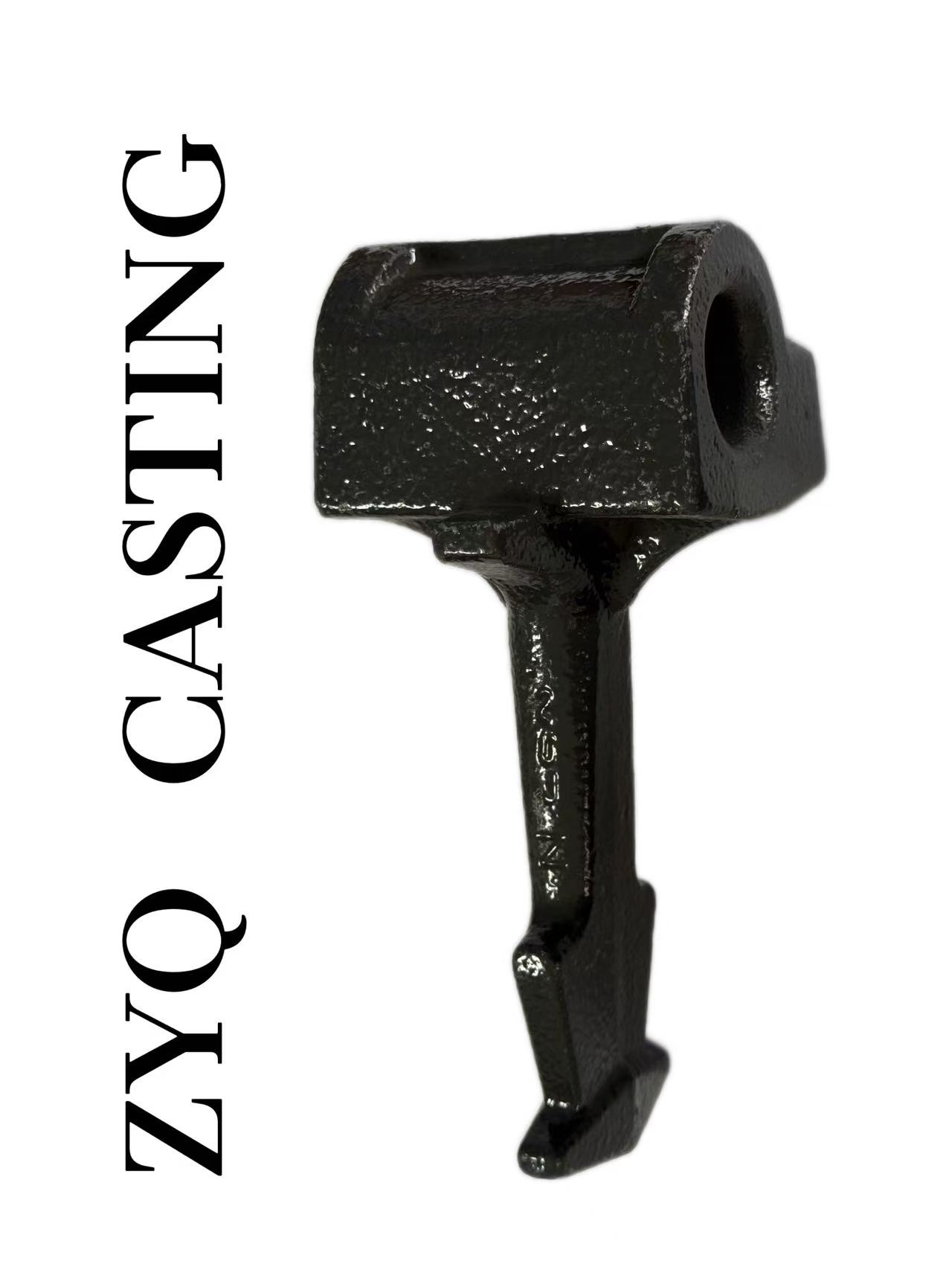
Plenty of machine shops quote tolerances in the ±0.005 in range without thinking twice. The same part drawing handed to a shop that specializes in tight work gets a different response: thermal stability, probing routines, and tool pressure get analyzed before the first cut. Holding tolerances most shops won't touch is less about having an expensive machine and more about controlling every variable that can shift a dimension by a few tenths.
That means running warm-up cycles until the spindle and ballscrews stabilize, checking parts against a master gauge instead of relying on machine feedback alone, and sometimes slowing the feed to avoid deflection. It also means telling a customer that a 0.0002 in true position on a 6-inch bore is not realistic without a controlled environment. Shops that survive in this niche earn trust by delivering measurements that repeat on a CMM, not just on the machine that made the part.
Heat Treatment and Hardening: Giving Parts a Second Life of Strength
When a steel component gets heated past its critical temperature and then cooled at a controlled rate, the internal crystal structure shifts. Martensite forms—a hard, brittle phase that gives the part a completely different character. This isn't just surface treatment; it changes the material's core behavior. A gear tooth or a camshaft lobe that once deformed under load can now resist wear many times longer.
The sequence matters as much as the temperatures. Quenching alone can leave a part too brittle, so tempering follows to relieve stress and restore toughness. Case hardening, where only the outer skin is enriched with carbon before quenching, lets you keep a ductile interior while getting a glass-hard exterior. It's a balancing act between hardness and fracture resistance.
Shops often rely on specific recipes—austenitizing at 850°C, oil quenching, then tempering at 300°C—because the wrong cooling rate can crack a workpiece. Each alloy responds differently, so heat treatment is as much about experience as it is about metallurgical theory. That's what turns a soft, machinable blank into a durable, load-bearing component.
Custom Parts Without the Runaround: From CAD File to Finished Component
Uploading a CAD file is usually where the headaches begin—file format mismatches, vague quotes, and long email chains. Here, the process starts with a simple drag-and-drop. The system reads native SolidWorks, STEP, and IGES files directly, so there's no need to convert anything or wait for a sales engineer to interpret your design. Within minutes, you get a clear, itemized price based on geometry, material, and finish, not on how busy the quoting department is.
What happens next is even more important. Instead of sending your part back with a list of problems, the platform flags manufacturability issues automatically—thin walls, awkward undercuts, or tolerances that are tighter than necessary. You can adjust the design in your own CAD tool and re-upload in seconds. Once everything looks good, the job moves straight to production. No phone tag, no hold music, no vague promises about a callback.
The finished component arrives with an inspection report that matches the original CAD dimensions, not a surprise. If something isn't right, the rework process is just as direct—upload the updated file and the new part is on its way. That's the whole idea: custom parts should feel like ordering something off the shelf, even when they're anything but.
Surface Engineering: Coatings That Laugh at Rust and Abrasion
Imagine a world where steel beams shrug off decades of salty spray, pump impellers treat sand like a minor inconvenience, and cutting tools stay sharp long after their predecessors would have been retired. That world isn't science fiction — it's the practical reality of modern surface engineering. Rather than accepting that metal surfaces will inevitably pit, corrode, or wear away, engineers now treat the outermost few microns of a component as a design frontier. By manipulating chemistry, microstructure, and deposition techniques, they create coatings that actively resist the two great destroyers of industrial equipment: rust and abrasion.
What makes these coatings truly impressive isn't a single magic formula but a tailored approach. For rust resistance, options range from dense ceramic barriers like aluminum oxide applied via plasma spray, to sacrificial zinc-rich primers that corrode in place of the steel beneath. On the abrasion side, tungsten carbide overlays and diamond-like carbon films offer hardness values that rival natural gemstones while remaining bonded to ductile substrates. The real art lies in matching the coating to the exact failure mode — a mining chute needs impact toughness more than pure hardness, while a marine fastener demands electrochemical stability above all else.
Perhaps the most overlooked advantage is economic. A well-chosen surface treatment can extend component life by a factor of five or ten, meaning fewer replacements, less downtime, and lower material consumption overall. The coating itself might cost only a few percent of the part's price, yet it shifts the maintenance cycle from monthly panic to annual inspection. That's why industries from offshore wind to food processing are quietly adopting these technologies — not because they love coatings, but because they've learned that laughing at rust and abrasion is simply good business sense.
Testing Before It Ships: Simulating Years of Field Abuse in Days
We don't wait for a decade of real-world wear to reveal weak points. Instead, engineers build torture rigs that cram years of vibration, thermal shock, and corrosive mist into a single workweek. A suspension component that would normally see 100,000 miles of potholes gets cycled through a hydraulic shaker until it cracks, recording every strain reading along the way.
The trick is matching the simulation to the actual failure signatures seen in returned units. That means tracking which solder joints fatigue first, where seals start weeping, and how UV exposure dulls plastic housings. Then the lab turns those observations into accelerated profiles, so a 72-hour run becomes a credible stand-in for five years of field abuse.
The payoff shows up in the warranty data: fewer surprises, tighter design margins, and a bill of materials that isn't overbuilt just to cover guesswork. If a part survives the shaker, the salt fog chamber, and the thermal cycler in sequence, it earns the right to ship.
FAQ
We mostly machine from ductile iron castings and 4140 or 4340 alloy steel forgings. For lighter brackets, we use HSLA steel sheet, but anything that touches soil or bearings gets hardened stock to survive rock impacts and abrasive wear.
Critical fits are finished on multi-axis CNC lathes and machining centers with in-process probing. We hold bearing seats to ±0.008 mm where needed, and run a first-article CMM check on every new production lot before releasing the line.
We use five-axis milling for intricate housings and spline hobbing or broaching for PTO shafts. Deep hole drilling with high-pressure coolant keeps hydraulic passages straight and chatter-free.
Induction hardening works well for wear edges on blades and coulters because it leaves a tough core. For shafts and gears, we often use carburizing or nitriding, then temper to the spec the customer’s operating conditions demand.
Every batch goes through dimensional checks with micrometers, calipers, and a CMM for critical datums. We also run magnetic particle inspection on forged parts and pressure-test any hydraulic housings to catch leaks before they ever reach a field.
Yes. We scan the worn piece with a blue-light 3D scanner, rebuild the missing geometry in CAD, and machine a new one from better material. We usually produce a first-off prototype for the customer to trial before full production.
We use zinc-nickel plating on fasteners and powder coating or e-coat on larger frame parts. For planter discs, a phosphate wash followed by an anti-rust oil gives good field protection without interfering with the cutting edge.
Conclusion
Walk into a modern agricultural machinery parts factory and the first thing you notice is the deliberate choice of steel and alloys—materials picked not for show but for surviving grit, moisture, and punishing loads season after season. From there, rows of CNC machining centers do the heavy lifting, holding tolerances that many general shops wouldn't even quote. It's not just about cutting metal; it's about repeatability when a single batch of shafts or housings has to fit across dozens of machines in the field. Heat treatment follows as a quiet transformation: induction hardening, carburizing, or through-hardening gives each part a second life of strength, pushing wear resistance deep into the surface where it matters most.
What really changes the game is how custom work flows from a customer's CAD file straight to a finished component without endless back-and-forth. Instead of forcing farmers to adapt to off-the-shelf limitations, the factory engineers around the actual failure point—then applies surface coatings like zinc-nickel, ceramic, or carbide overlays that shrug off rust and abrasive crop residue. Before anything ships, testing rigs recreate years of field abuse in days: cyclic loading, mud slurry immersion, impact strikes. Every batch leaves with proof it can handle the kind of beating that turns lesser parts into scrap long before the season ends.
Contact Us
Contact Person: Nico Yin
Email: [email protected]
Tel/WhatsApp: 8618561567088
Website: https://www.ductileironparts.com/