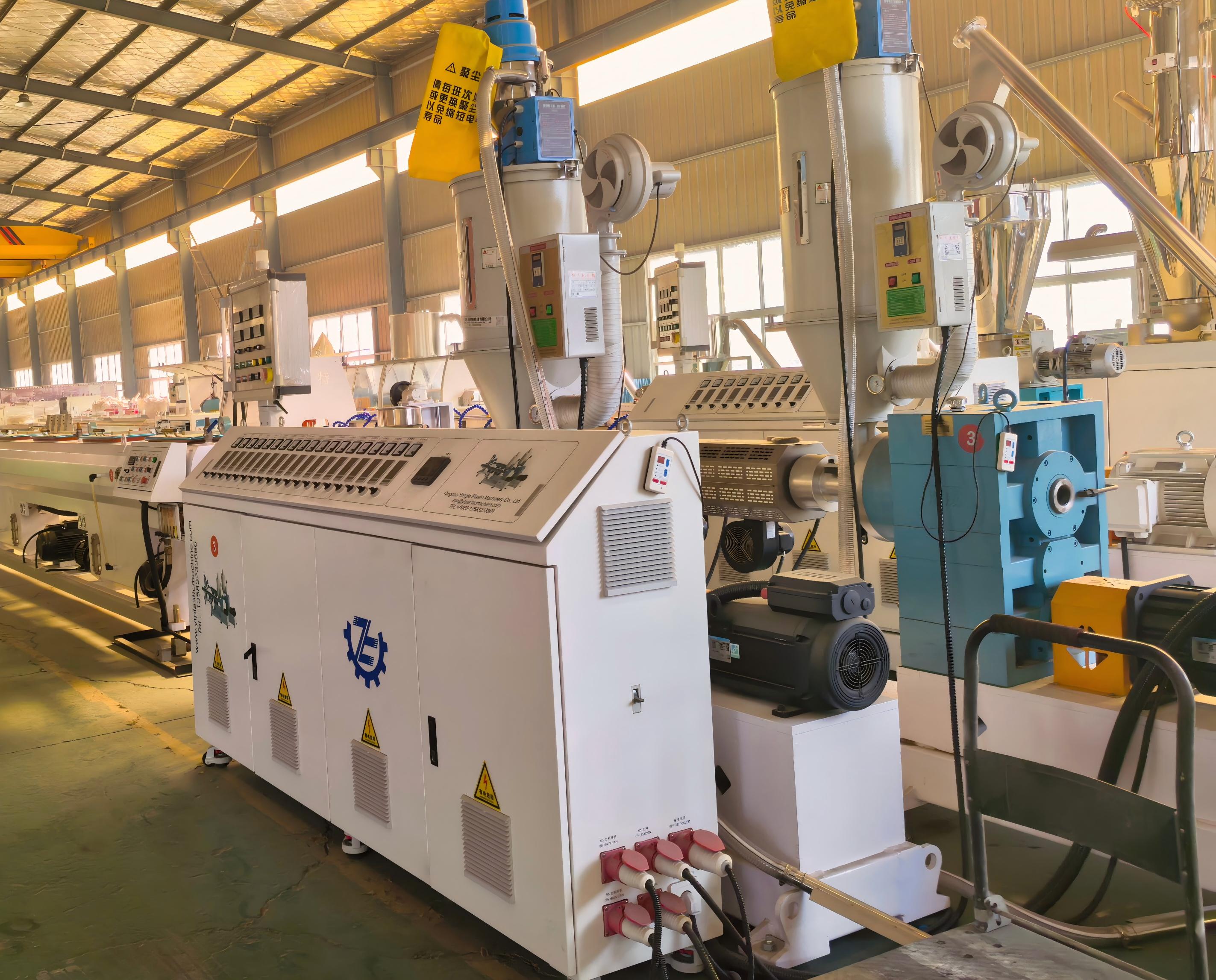

Advanced WPC Decking Machine Solution for High-Quality Composite Flooring Production
2026-07-27
The composite decking industry is evolving fast, and producing high-quality WPC flooring demands more than just raw materials—it requires precision engineering from the ground up. If you’re scaling production or chasing flawless surface finishes, the machinery you choose makes all the difference. Enter Yongte, whose advanced WPC decking machine solutions are redefining what efficient, high-output composite flooring manufacturing looks like. In this post, we’ll explore the technology driving consistent quality, how it tackles common production pain points, and why forward-thinking manufacturers are switching to Yongte’s integrated approach. Stay tuned—you might just find the missing piece for your next production upgrade.
Precision-Engineered Machinery for Flawless Composite Decking
Achieving a perfect composite deck starts long before the first board is laid—it begins on the factory floor. The machinery behind these materials operates at tolerances most builders never see, calibrating every core layer and cap stock to eliminate the subtle waves and warps that can haunt an installation. Advanced extrusion systems maintain consistent melt temperatures and pressure, ensuring each plank emerges with a rock-solid density and a surface that resists fading, staining, and splintering for decades. This isn't just manufacturing; it's a controlled process where micrometers matter as much as miles per hour.
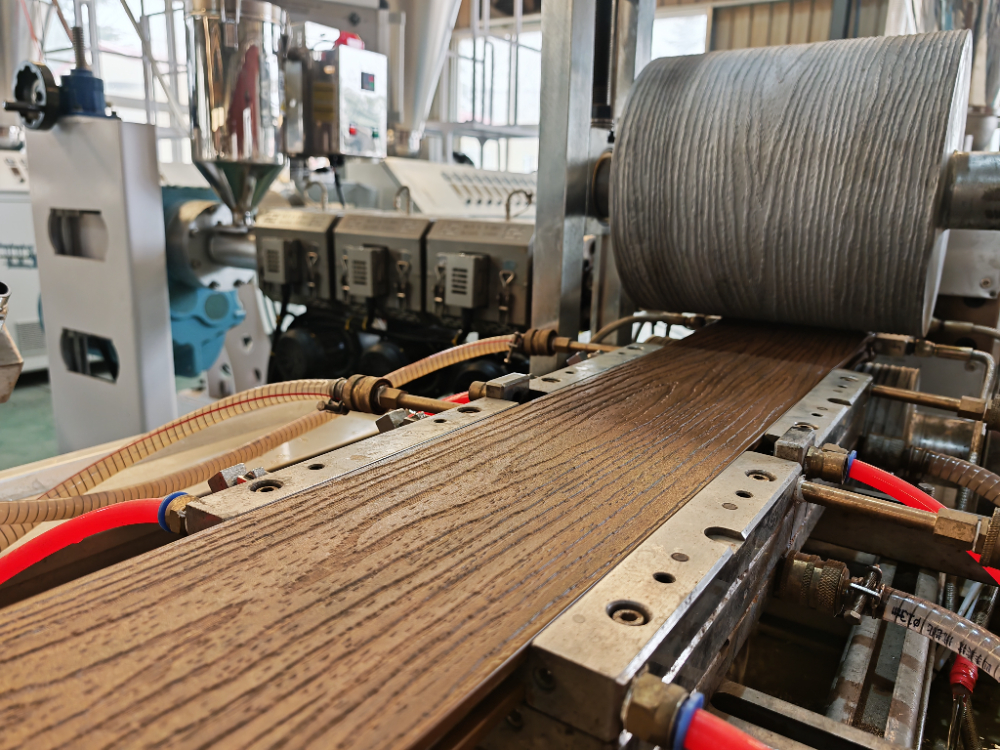
What truly separates exceptional decking from the ordinary is how well the equipment handles the marriage of wood fibers and polymers. Precision mixing and cooling modules distribute the composite blend uniformly, preventing brittle spots or soft patches that lead to premature wear. Laser-guided calibration tools then profile every edge and groove to a flawless match, so when installers lock boards together, the seam nearly disappears. The result is a deck that looks monolithic, drains water effortlessly, and feels solid underfoot from end to end.
Beyond the raw output, smart automation has redefined quality control. In-line sensors scan each piece for dimensional accuracy and surface defects at full production speed, kicking out any plank that falls short of the spec. Data from these scans feeds back into the system, allowing real-time micro-adjustments that keep the entire batch on target. It's a relentless loop of measurement and refinement that delivers decking with zero compromises—boards that not only install faster but stay beautiful with virtually no upkeep, year after year.
Streamlined Production Workflows to Maximize Output
Every production line has its hidden bottlenecks — those tiny hiccups that quietly eat away at your daily output. Pinpointing these friction points isn't about grand overhauls; often it's the small stuff, like swapping two assembly steps or repositioning a tool rack, that cuts cycle time by seconds that stack up fast.
Workflow refinement works best when it's shaped by the people on the floor. Giving operators ownership to flag inefficiencies and test quick fixes turns process optimization into a living practice rather than a dusty manual. When a packaging team reroutes material flow based on their own insight, the result is a layout that actually mirrors real movement, not a theoretical ideal.
Technology only earns its keep when it fits the groove of the team. A well-placed sensor or a simple dashboard that alerts before a jam happens is worth far more than a complex system that demands constant babysitting. The goal is seamless support — tools that fade into the background so the workflow stays fluid and output climbs without the crew feeling the strain.
Smart Automation Features for Consistent Quality Control
Modern production lines rely on adaptive sensors that self-calibrate throughout the day, catching drift before it becomes a defect. These systems don't just react to thresholds—they learn the subtle rhythm of each machine and flag deviations that human inspectors might miss. A slight vibration change in a spindle, for instance, can trigger an automatic adjustment long before a part falls out of spec, keeping output steady without constant human oversight.
Vision-based inspection modules now compare every unit against a dynamic reference model that updates with each batch. Instead of relying on fixed templates that grow stale, the system adapts to acceptable variations in texture, color, or alignment, dramatically reducing false rejects. At one facility, this cut down the scrap rate by nearly a third while maintaining the same defect detection accuracy, simply because the automation learned what truly mattered for functionality rather than cosmetic perfection.
What sets advanced setups apart is the feedback loop between testing stations and upstream processes. If an end-of-line torque test shows a creeping trend, the system adjusts the assembly tool output immediately, often within the same shift. Engineers don't need to chase down a problem manually—the automation traces the root cause, recalibrates on the fly, and logs the event for traceability. The result is a process that enforces quality consistency without slowing down throughput or burying technicians in data overload.
Durable Build Materials That Extend Machine Lifespan
Choosing the right materials is more than a technical decision—it's a long-term investment in machine health. High-grade alloys, reinforced composites, and hardened steels resist wear in ways standard components can't match. Instead of frequent part swaps, operators see months or even years of consistent performance, especially under punishing loads or constant cycling. The cost savings aren't just in replacement parts; reduced downtime keeps production lines moving and maintenance crews focused on improvement rather than repair.
Beyond the obvious strength advantages, advanced materials often combat failures that creep up silently. Corrosion-resistant coatings shield internal components from moisture and chemical attack, while vibration-dampening laminates prevent micro-cracks that eventually lead to catastrophic breaks. These aren't speculative gains—field data shows equipment built with upgraded materials routinely outlasts cheaper alternatives by two to three times in heavy industries like mining, agriculture, and construction.
What truly sets durable builds apart is how they handle real-world abuse. A loader arm forged from premium steel won't just survive an accidental overload—it'll shrug it off without permanent deformation. Bearings with ceramic hybrid races laugh at contaminated grease that would seize standard steel. When every component is selected to endure the worst-case scenario, the entire machine inherits a stubborn resilience that flatters maintenance schedules and shrinks total cost of ownership in ways that make accountants smile.
Modular Design for Easy Customization and Expansion
A truly adaptable system starts with a foundation that doesn’t force you into rigid templates. By breaking down functionality into swappable units, you can address specific needs without overhauling the entire structure. Need a payment gateway integration? Plug in the relevant module. Expanding to a new region? Add localization components as you go. This approach keeps the core lightweight while letting each piece evolve independently.
The real advantage shines when teams with different priorities work on the same project. Designers can refine the interface modules, developers optimize backend services, and content creators manage their areas—all without stepping on each other’s toes. Custom modules act like building blocks, so scaling up means adding rather than reworking. If a particular component no longer serves its purpose, swapping it out becomes a matter of redirecting connections instead of untangling dependencies.
Long-term maintenance also benefits from this philosophy. When updates or compliance changes come along, you’re not patching a monolithic codebase—you’re upgrading isolated parts. This reduces risk and keeps downtime minimal. Whether you’re prototyping a new feature or adapting to market shifts, the modular approach turns what could be a major rewrite into a simple adjustment, saving resources and keeping your platform genuinely flexible.
Low-Maintenance Systems That Cut Operating Costs
Trimming operating expenses doesn't have to mean constant oversight or complex upkeep. The key lies in systems designed to self-manage, from sealed bearings that never need lubrication to smart controllers that adjust settings on their own based on real-time conditions. By reducing the number of moving parts and eliminating routine manual checks, these systems sidestep the hidden costs of labor, downtime, and premature replacements. Think of it as building reliability into the infrastructure itself, so the operation hums along without demanding a slice of your team's attention every day.
Another overlooked angle is how material choices can quietly drive down long-term costs. Corrosion-resistant alloys, UV-stabilized polymers, and self-cleaning surfaces aren't just durability upgrades—they're silent budget guardians. They prevent the slow degradation that leads to emergency repairs and unplanned outages, which often come with premium price tags. When a system's components are inherently indifferent to the wear and tear of their environment, the maintenance calendar starts to thin out, and so do the associated costs.
It's also worth considering how data logging and trend analysis transform routine maintenance into a lean, need-based activity. Instead of replacing parts on a fixed schedule, sensors track actual usage and wear, flagging only what needs attention. This shift from reactive to predictive upkeep keeps inventory low and technician hours focused where they matter. The result is a system that doesn't just run with minimal intervention but actively tells you when it's time for a small, planned investment—before it becomes a large, unbudgeted expense.
FAQ
The system handles a wide range of materials, including wood flour, rice husk, recycled HDPE or PVC, and various additives like coupling agents and UV stabilizers. Material proportions can be adjusted easily through the gravimetric dosing units to meet specific product requirements.
A combination of precision temperature controls, vacuum calibration tanks, and downstream caterpillar haul-offs keeps extrusion stable. Real-time thickness gauges and automated feedback loops correct deviations within microns, so you get uniform boards without constant manual tweaking.
Yes, swapping out the die and calibrators takes under an hour, and the recipe management system stores all parameters for different profiles. That means you can switch between a grooved solid plank and a deep-embossed hollow tile without recalibrating everything from scratch.
The extruder uses an efficient AC motor with inverter drives, and barrel heating zones are individually insulated. Typical energy usage runs about 0.35–0.45 kWh per kilogram of output, depending on the bulk density of the raw mix and the profile thickness you're running.
The machine includes quick-release covers on the die head, automated screen changers that purge contaminants without stopping the line, and a centralized lubrication system. Operators also get predictive maintenance alerts based on motor current trends, so they can schedule interventions before anything fails unexpectedly.
The co-extruded ASA layer provides strong UV and scratch resistance, while the WPC core resists moisture and rot. In accelerated weathering tests, boards retain over 90% of their original color after 3,000 hours, and they can handle temperature swings from -30°C to 60°C without warping.
We send a team of two engineers for on-site assembly and commissioning, typically lasting five to seven days. They train your staff on die changes, parameter adjustments, and basic troubleshooting. Remote diagnostics and spare parts ordering are accessible through a dedicated web portal afterward.
Conclusion
The advanced WPC decking machine is designed with uncompromising precision, incorporating CNC-machined rollers and temperature-controlled extrusion barrels that create consistently smooth, dimensionally accurate boards. Every component, from the twin-screw extruder to the embossing unit, is synchronized to produce flooring that rivals natural wood in texture and durability. Built from high-chromium alloys and treated with anti-corrosion coatings, the machine withstands years of abrasive composite materials without loss of performance. Its modular architecture goes beyond simple add-ons—entire processing stations can be swapped or reconfigured within hours, allowing manufacturers to shift from solid decking to hollow profiles or capstock co-extrusion with minimal effort. This engineering depth not only safeguards product quality but also empowers businesses to respond swiftly to market trends without investing in entirely new lines. As a result, each decking board emerges with precisely matched colors, deep embossing fidelity, and rugged structural integrity that installation professionals and end-users trust.
Streamlined production workflows are at the heart of this solution, intelligently integrating material feeding, extrusion, embossing, and cooling into an uninterrupted flow that maximizes throughput. Smart automation features continuously monitor temperature, pressure, and speed, making real-time adjustments to eliminate defects and maintain uniform quality across large batches. Advanced sensors detect even minor inconsistencies in material flow or melt temperature, automatically adjusting screw speed or cooling fans to keep every board within spec. Because the system requires minimal manual intervention, operators can focus on strategic oversight rather than constant tweaking. Additionally, the low-maintenance design—with self-lubricating bearings, easy-access panels, and diagnostic alerts—drastically cuts operating costs and reduces unplanned downtime. Furthermore, the system's self-cleaning features and tool-free parts replacement let maintenance crews complete routine tasks in minutes rather than hours, freeing up valuable production time. This synergy of intelligent control and robust design delivers a production line that not only meets today's demanding output targets but also adapts to future challenges, cementing a manufacturer's competitive edge.
Contact Us
Contact Person: Ms Qin
Email: [email protected]
Tel/WhatsApp: 8613583233866
Website: https://www.yongteplast.com