

3-in-1 Filling Machine Factory Innovations That Boost Packaging Efficiency
2026-10-23
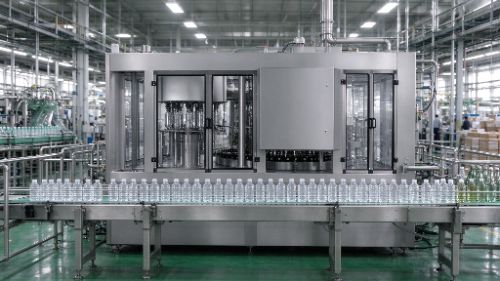
Rinsing, filling, and capping used to mean three separate stops on the packaging line—each one a chance for slowdowns, spills, or contamination. The newest 3-in-1 filling machines from Wanying Machinery remove those handoffs altogether. By rethinking the factory-level design, these systems compress three critical steps into one continuous, precision-timed motion. The result isn't just a faster line; it's a quieter, cleaner, and more predictable packaging process. Here's a look at the innovations driving that shift.
One Chassis, Three Jobs, Zero Extra Conveyors
The idea of squeezing multiple operations onto a single moving platform isn't new, but actually pulling it off usually means bolting on extra conveyors, diverters, or transfer stations that eat up floor space and create new failure points. This design throws that playbook away. By rethinking how the chassis itself interacts with tooling and work zones, three distinct production steps happen while the unit stays on the same carrier from start to finish. No handoffs, no re-clamping, no auxiliary belt loops snaking around the cell.
What makes it work is the chassis doubling as a precision fixture. Each station engages with the same locating features, so a part never loses its positional reference. That means you can drill, fasten, and inspect without transferring the workpiece to another line. The result isn’t just a shorter footprint — it’s fewer motors to maintain, less controls programming, and a throughput curve that doesn’t dip every time a traditional conveyor would have transferred the load. In high-mix environments, that simplicity translates directly into faster changeovers and fewer places for variance to hide.
Why Changeovers Used to Eat an Hour—and What a Tool-Free Head Swap Does Instead
For years, swapping out a print head meant reaching for wrenches, alignment jigs, and a healthy dose of patience. Every bolt had to be loosened, the old head carefully pulled away, the new one seated just right, and then each fastener torqued back down in sequence. If the tolerances were off by even a fraction of a millimeter, the first test run would spit out misaligned layers or, worse, send the carriage grinding into the frame. That's why a simple changeover could easily devour forty-five to sixty minutes—time spent not printing, not iterating, just fiddling with hardware.
The shift to a tool-free head swap eliminates nearly all of that friction. Instead of threaded fasteners, the assembly relies on a spring-loaded latch or magnetic dock that snaps into place with one hand. You pull the old head out, push the new one in until you hear the click, and the machine's firmware recognizes the new tool automatically. There's no torque spec to memorize, no risk of cross-threading a tiny screw in a hard-to-reach corner. What used to require a bench full of tools now takes less time than refilling a water bottle.
That saved hour isn't just a convenience—it changes how you use the machine. Short runs, material switches, even mid-project nozzle size changes become trivial. You stop batching prints to avoid the pain of a head swap and start using the right tool for the job every single time. The bottleneck moves from the maintenance table back to the print bed, where it belongs.
Servo Precision Without the Complexity: Filling Foamy Liquids at Full Speed
Foamy liquids have always been a headache for high-speed filling. Air trapped in the product expands as it leaves the nozzle, leading to splashing, inconsistent fill levels, and messy changeovers. The usual workaround is to slow the line down or add extra settling time, which eats into throughput. Servo-driven fillers take a different route: instead of forcing the liquid through at a constant rate, they use rapid, precise adjustments in piston speed and nozzle position to follow the foam's behavior in real time. This keeps fills accurate without dialing back production.
The real advantage is how little operator input this requires. Rather than tuning cams, swapping springs, or manually tweaking air pressure, a technician simply selects the product recipe on the touchscreen. The servo system then handles the bottom-up fill profile, drip retraction, and acceleration curves that work best for that specific liquid. A craft brewery filling nitro coffee at 300 bottles per minute, for example, can hold fill variation under one percent even though the product foams heavily when agitated. No trial runs, no wasted product, and no need for a controls specialist on standby.
That combination of speed and simplicity changes the economics for lines handling whipped toppings, shaving foams, liquid soaps, or dairy-based drinks. You get the repeatability of a fully customized filling curve without the complexity of programming one from scratch. The servo does the fine-tuning internally, responding to pressure feedback every few milliseconds, so the fill stays tight even as temperature or viscosity shifts during a long run. It is precision that works in the background, not a science project on the production floor.
When Less Floor Space Means More Packs Per Shift
Shrinking the footprint of a packing area often forces a rethink of how people move. Instead of walking to grab boxes, tape, or void fill from separate shelves scattered across the room, a tighter layout puts those supplies within arm's reach. The result isn't just saved steps; it's a rhythm that keeps hands busy and orders flowing without the start-stop delays that eat into a shift.
Vertical storage and modular stations do a lot of the heavy lifting here. A wall-mounted dispenser or a slim cart tucked under the bench can hold everything from poly bags to labels without claiming extra floor. When every tool has a fixed, close spot, packers spend less time hunting and more time sealing cartons. Even a couple of seconds saved per package adds up quickly across hundreds of orders.
The real shift happens when space constraints push managers to eliminate wasted motion rather than just cramming more people in. A well-planned compact area can outpace a sprawling one simply because the distance between pick, pack, and ship shrinks. Fewer square meters, used deliberately, often translate into more completed packs per hour—not by working faster, but by removing the empty space that silently steals time.
The Unseen Payoff: How Self-Diagnostics Cut Unscheduled Stops
Unscheduled downtime tends to hit when it hurts most—right in the middle of a high-priority production run, or when half the maintenance crew is already tied up elsewhere. The usual pattern is reactive: a bearing seizes, a motor overheats, a valve sticks, and the whole line grinds to a halt. But machines that watch themselves change that equation. A self-diagnostic system doesn't wait for a catastrophic failure; it tracks subtle shifts in vibration, current draw, or thermal signature, then flags an anomaly days before it becomes a breakdown. In one food processing plant, a compressor's built-in diagnostics caught a gradual rise in discharge temperature that no one had noticed on the floor. The fix took forty minutes during a scheduled shift change. The alternative—waiting for the unit to trip—would have meant six hours of lost production and a rushed overnight repair.
The real payoff isn't just avoiding the big failure; it's reclaiming the hours that get eaten by minor, recurring stoppages. Many unscheduled stops aren't dramatic meltdowns. They're small interruptions: a sensor drifting out of calibration, a filter clogging early, a pneumatic leak slowly bleeding pressure. Operators often reset these and move on, never logging them properly. Self-diagnostics, however, record every anomaly, however small, and compare it against historical patterns. Over time, the system learns what normal looks like for that specific machine, not just for a generic model. A packaging line in a Midwest facility used this approach to cut unplanned stoppages by a third in six months. The diagnostics showed that most micro-stops happened right after a particular shift change, which led to a retraining program and a simple change in startup sequence. No new equipment needed—just better visibility.
There's also a quieter benefit: it reduces the stress and guesswork for maintenance teams. When a machine can tell you exactly which component is trending toward failure and what likely caused it, you stop playing whack-a-mole with parts. Instead of replacing three or four suspect items just to be safe, you replace the one that the data points to. This not only saves money on parts but also prevents the collateral damage of unnecessary disassembly—often, more failures are introduced by someone poking around than by normal wear. A plant manager in the automotive sector described it as switching from a fire department to a weather service. Instead of racing to put out a blaze, they now watch the forecast, schedule maintenance around actual need, and keep the line moving. That shift in mindset, from reactive to anticipatory, shows up in the bottom line as fewer weekend callouts, lower overtime costs, and a production schedule that actually meets its numbers.
A Packaging Line That Grows With Your SKU List—Not Against It
Most packaging systems assume your product lineup stays frozen in time. Buy a machine sized for today’s bottles, cartons, or pouches, and any new format becomes a retrofit headache. This line flips that logic. Its modular stations and tool-free changeover points let you add lanes, swap sealing jaws, or extend conveyor length in hours—not months. You aren’t locked into a single container geometry; the equipment reads each SKU’s profile and adjusts guide rails, fill heads, and label positions on the fly. That means a seasonal flavor launch or a shift from glass to flexible film doesn’t trigger a capital expenditure review.
What makes the growth feel effortless is the control architecture. Instead of hard-coded recipes buried in a PLC, the line stores format data as simple, editable profiles. Operators can clone an existing setup, tweak three or four parameters, and validate the new configuration during a coffee break. No vendor service call, no downtime for mechanical recalibration. Over time, the line builds a library of proven formats, so reintroducing a product from three years ago is a one-tap recall—not a re-engineering project.
The real payoff shows up when your SKU count climbs from dozens to hundreds. Many lines slow down or jam more often as variety increases. This one maintains throughput because every station monitors its own alignment in real time and compensates for slight variations in label curl, cap torque, or film tension. You get the same output whether you’re running a single high-volume item all week or switching among twelve low-volume variants each shift. That flexibility isn’t a feature you bolt on later; it’s built into the frame, the software, and the way operators are trained from day one.
FAQ
It consolidates three processes into a single frame, so operators spend less time moving containers between stations. The real gain comes from fewer transfer points, which lowers the chance of spills or misalignment and keeps the line moving at a steady pace.
With tool-less adjustments and recipe-driven settings, many lines can switch between bottle sizes or cap styles in under fifteen minutes. Some factories use quick-release star wheels and height-adjustable nozzles to make the switch even faster without needing specialized technicians.
Instead of relying on basic timed fills, newer machines use servo-driven pistons or magnetic flow meters that adjust in real time. For foamy liquids, bottom-up filling nozzles and vacuum-assisted drips control reduce air pockets and waste, keeping fill volumes tight across thousands of containers.
Yes, because the integrated design shrinks the footprint and simplifies setup. Smaller factories can run short batches of different products without dedicating three separate lines, and the same machine can often handle a range from thin juices to thick creams with a few parameter changes.
Rigid containers like PET bottles, glass jars, and HDPE jugs see the biggest gains. The synchronized star wheels and neck-handling system keep them stable through filling, capping, and labeling, which is harder to achieve with unstable or irregularly shaped pouches.
Daily cleaning of fill nozzles and cap chutes, weekly checks on torque heads, and monthly calibration of level sensors prevent most slowdowns. Factories that track wear on sealing gaskets and replace them before they degrade avoid sudden stoppages during high-demand periods.
A single HMI with recipe storage means operators only learn one interface instead of three. Error messages point to the exact station, and many systems include guided recovery steps, so less experienced staff can clear jams or adjust cap torque without calling maintenance.
Most modular 3-in-1 platforms allow swapping capping heads, adding a second labeling station, or integrating a date coder without replacing the whole line. That flexibility protects the initial investment and keeps the line relevant as packaging trends shift.
Conclusion
Modern filling lines often choke on their own supposed flexibility—extra conveyors bolted on, changeover tools scattered, servo settings buried in menus. The 3-in-1 machine flips that script by putting rinsing, filling, and capping on a single chassis, so bottles never have to leave one clamping neck guide. That alone removes the transfer points where most micro-breakage and foam kick-up happen. When a new product rolls in, the old dance of loosening bolts and retiming belts disappears; a tool-free head swap gets you from thin juices to thick lotions in under ten minutes. Foamy liquids, which normally force you to slow the whole line down, hold full speed because the servo feedback loop adjusts plunger acceleration on the fly instead of relying on a fixed cam profile. Floor space savings aren't a side note—they're the reason one operator can watch two lines without walking half a kilometer per shift.
The quieter payoff lives in the diagnostics board. Self-checks on seal pressure, nozzle drip, and cap torque run between cycles, flagging a worn O-ring or a drifting load cell before it becomes a 2 a.m. stoppage. That shifts maintenance from reactive to something closer to preventive without adding a dedicated technician. And because the chassis is modular—same servos, same HMI, just different star wheels and pump heads—adding SKUs feels like a software update rather than a capital project. A line that used to demand a forklift and a full weekend to reconfigure now asks for one skilled operator and a clean tool cart. The result isn't just speed; it's predictable speed, which is what actually gets more cases out the door by Friday.
Contact Us
Contact Person: Tyson
Email: [email protected]
Tel/WhatsApp: +8613396971296
Website: https://www.wanyingmachinery.com