

16kWh Energy Storage Battery Pack Technology Providers Are Transforming Residential Energy Storage Systems
2026-10-27
Residential energy storage is no longer just about backup power—it's about reshaping how homes consume, store, and even trade electricity. At the center of this shift are 16kWh energy storage battery pack technology providers, whose modular designs and smarter battery management are quietly replacing bulky, single-purpose systems. What makes this capacity so pivotal? It hits a sweet spot for daily solar self-consumption and peak-shaving without over-engineering costs. Companies like UNC are pushing beyond spec sheets, integrating thermal stability and streamlined installation into packs that fit a wider range of home layouts. Yet transformation isn't only technical; it's also about who controls the energy flow and how easily a household can scale up later. Before diving into the technologies themselves, it's worth asking: are these providers truly making home energy independence simpler, or just adding another layer of complexity?
The Real Reason 16kWh Packs Are Replacing Smaller Backup Banks
Most people assume the shift to 16kWh packs is about running more appliances during an outage. That’s part of it, but the actual driver is deeper: smaller backup banks were never designed for daily cycling, and homeowners have started treating them that way. A 5kWh unit might cover an evening blackout, but once you add a few cloudy days or a heat pump, it gets cycled from full to empty almost daily. That kind of depth-of-discharge kills lithium cells within a few years, whereas a 16kWh pack rarely dips below 30% under the same load, so the chemistry stays comfortable. The bigger box isn’t just extra capacity—it’s a way to avoid replacing the battery every three years.
There’s also a quiet logic around inverter efficiency and time-of-use arbitrage. Smaller systems often run at lower state-of-charge, where voltage sag forces the inverter to work harder for the same output. With a 16kWh pack, you can stay in the flat part of the discharge curve longer, which means fewer losses and less heat. And for people who charge from solar during the day and run the house off battery at night, the larger buffer lets them avoid importing grid power during peak pricing without micromanaging every load. It’s not about being off-grid; it’s about not thinking about it.
Finally, there’s the overlooked reason: installers hate callbacks. A homeowner with a 5kWh backup often runs it into the ground within two seasons, then complains about capacity loss. A 16kWh pack, even if undersized for whole-home backup, gives enough headroom that most users never hit an undervoltage cutoff. That means fewer warranty claims, fewer support tickets, and a product that actually lasts the decade promised on the spec sheet. The real replacement isn’t about more watt-hours—it’s about removing the failure modes that smaller banks baked in from the start.
Battery Management Tweaks That Keep a 16kWh Pack Running Past a Decade
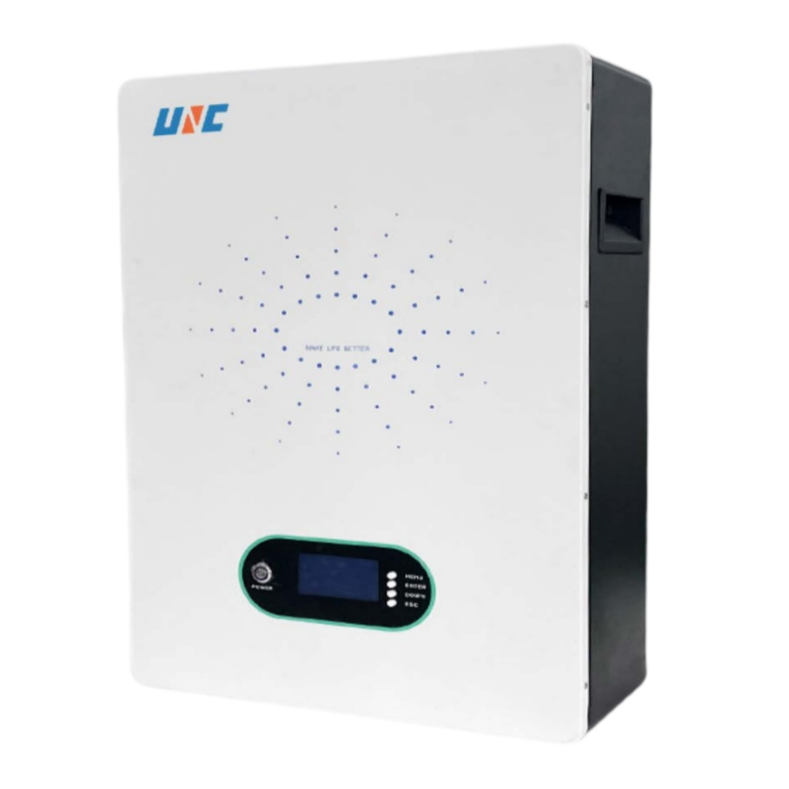
Most 16kWh packs die early not from chemistry limits, but from owners treating them like phone batteries. The single biggest lifespan killer is sustained high state of charge. Keep the pack between 20% and 80% for daily driving; reserve 100% only for days you actually need full range. This alone can double the cycle count before noticeable capacity fade sets in.
Temperature is the silent accelerant. Fast-charging a hot pack after a long highway run pushes lithium plating, so let the battery cool for 30 minutes before plugging into a DC charger. In winter, avoid charging a frozen pack at full power — many vehicles let you set a departure timer that warms the battery first, which reduces internal resistance and stress.
Once a month, do a shallow balancing cycle: drive down to 10%, then charge slowly on AC to 90% and let the BMS sit for an hour. Don't obsess over perfect cell voltages, but occasional slow top-ups help the management system recalibrate its state-of-charge estimate. Finally, minimize tiny top-up sessions — plugging in for 5 minutes just to go from 78% to 82% creates unnecessary micro-cycles.
How Quiet Inverters and High-Voltage Packs Change Nighttime Power
Nighttime power used to come with a trade-off: you could keep the lights on, but only if you accepted the low rumble of a generator or the constant hum of a struggling inverter. That equation shifts when a high-voltage battery feeds a well-matched quiet inverter. The higher pack voltage means the system pulls fewer amps for the same wattage, so cables stay cool and the inverter’s internal fan rarely needs to spin up. The result isn’t just lower decibels on paper—it’s a bedroom that stays quiet enough to hear the wind outside instead of a mechanical wheeze.
What high-voltage packs really change is how much you can run after dark without thinking about it. A 48V or higher setup moves energy more efficiently, so night loads like a fridge cycling on, a CPAP machine, or an outdoor security camera don’t force the inverter into loud, high-current bursts. Instead, the system strolls through the hours, often with the fan off or barely moving. You wake up to a warm room and a charged phone, not a fuel gauge or an error beep. Quiet becomes the default, not a feature you pay extra for.
What Three Regional Providers Learned From Early Adopter Homes
Midwest Fiber Cooperative assumed gigabit uptake would follow a predictable curve, but early adopter homes rewrote that script. Their first fifty connected households rarely touched the full bandwidth, yet complained bitterly about buffer bloat during evening video calls. The real demand wasn't raw speed—it was consistent latency under 12 milliseconds. Technicians found themselves re-engineering Wi-Fi placement far more often than splicing fiber, and the lesson stuck: the last fifty feet inside a home matter more than the last mile outside it.
Coastal Broadband Alliance discovered that smart home devices multiplied faster than anyone projected. One early adopter had 43 connected gadgets, each pinging the gateway at odd intervals and tripping security alerts. The provider's default router firmware wasn't tuned for that kind of chatter, so they began shipping a stripped-down QoS profile that prioritized voice and video packets over thermostat updates. Support tickets dropped by a third once users stopped blaming the network for their doorbell camera's sluggish load time.
Mountain West Connect learned patience from rural early adopters who treated installation day like a holiday. But the celebration faded when set-top boxes froze during snowstorms and the provider's remote diagnostics couldn't see past a customer's own mesh node. The fix wasn't another fleet of trucks—it was a plain-language guide showing homeowners how to reboot the optical network terminal without unplugging the fridge. That single page cut repeat visits by half and turned frustrated calls into five-minute fixes.
The Growing Appeal of Mixing Solar Inputs With a Single 16kWh Stack
Homeowners and small businesses are discovering that running several different solar arrays into one battery stack doesn't have to mean a tangle of incompatible components. A single 16kWh stack can absorb power from rooftop panels, ground-mounted strings, and even portable fold-out modules, provided the charge controller or hybrid inverter can handle multiple MPPT channels. This consolidation removes the need for separate battery banks for each input type, which used to force people into either overspending or underutilizing their gear.
The practical upside shows up quickly in daily operation. Instead of monitoring three battery indicators and wondering which one is nearly empty, you watch one state-of-charge reading for the whole stack. Wiring also gets simpler: fewer bus bars, fewer disconnects, and one central point for grounding and overcurrent protection. Installers often finish jobs in a single afternoon because they aren't replicating the same battery-to-inverter connection for each solar source.
Flexibility might be the quiet driver behind this shift. A 16kWh stack gives enough headroom to add a couple more panels in winter or plug in a temporary array during a power outage, all without touching the battery side. When the sun is weak, mixing inputs means the stack still gets partial charge from whichever surface is catching light, smoothing out the gaps that would otherwise drain a smaller, single-source system faster than expected.
Why Some Homeowners Now Start With 16kWh Instead of Scaling Up Later
Starting with a 16 kWh battery removes the headache of a second installation later. Many homeowners who initially choose a smaller unit to save money end up paying more once they need extra capacity. The second visit means another permit, another inspection, and often a higher labor charge because the installer has to redo wiring and reconfigure the system. It also means living through days or weeks where the house doesn't have enough backup for major loads like air conditioning or an EV charger. Choosing 16 kWh from day one sidesteps that entire cycle.
There's also the reality of changing utility rates and grid reliability. A few years ago, a smaller battery might cover evening peaks. Now, with time-of-use windows shifting and outages becoming more frequent in some regions, 16 kWh gives a practical buffer. You can run the refrigerator, a few lights, the internet, and even a heat pump for a reasonable stretch without constantly watching the state of charge. For families that plan to add an electric vehicle or switch from gas to electric appliances, that extra capacity isn't overkill—it's the new baseline.
Finally, the upfront price difference is often smaller than expected once incentives and financing are factored in. Rather than treating the battery as an add-on, installers are now designing around 16 kWh as a standard block. This can mean cleaner wiring, fewer connection points, and a more balanced solar-plus-storage setup. It's a practical hedge: you don't have to guess your exact future needs, but you also don't paint yourself into a corner with a system that's undersized from the start.
FAQ
A 16kWh pack typically covers the daily energy needs of an average household without overbuilding. It stores enough surplus solar to power essential loads through the evening peak and offers a meaningful backup reserve during outages, all while keeping the physical footprint and weight manageable for wall or floor mounting in a garage or utility room.
They are shifting from generic lithium-ion to lithium iron phosphate (LFP) chemistry, which resists thermal runaway far better. On top of that, providers integrate multi-layer battery management systems that monitor cell-level voltage, temperature, and current in real time, automatically isolating faults and balancing cells to prevent overcharge or deep discharge conditions that used to shorten pack life.
By standardizing module designs and automating pack assembly, they lower manufacturing costs. Several now offer modular 16kWh systems where homeowners can add capacity later, avoiding a large upfront investment. Better thermal management and predictive algorithms also extend cycle life to 10,000 or more, which reduces the cost per stored kilowatt-hour over the system's lifetime.
Most new packs are designed to work with hybrid inverters or separate battery inverters that can communicate over open protocols like Modbus or CAN bus. This lets the system read live solar production and household consumption, then decide in milliseconds whether to charge the battery, export to the grid, or draw from the pack. Many providers also offer retrofit kits that work with older string inverters through AC coupling.
Instead of simple time-based charging, providers now embed machine learning models that learn a home's consumption patterns, weather forecasts, and utility rate structures. The software can pre-cool or pre-heat the battery before a predicted peak, shift loads automatically, and even participate in virtual power plant programs where the utility pays the homeowner for grid services. All of this runs through a smartphone app with plain-language status rather than technical jargon.
Many new packs arrive as pre-assembled, plug-and-play units that a certified electrician can mount and commission in under half a day. Remote diagnostics allow providers to push firmware updates, run capacity tests, and identify failing cells without sending a technician on site. Some designs use hot-swappable modules, so a single faulty cell block can be replaced without taking the whole system offline.
Beyond the headline capacity, compare the continuous and peak power output, round-trip efficiency, warranty terms, and whether the chemistry is LFP or NMC. Ask about compatibility with your specific inverter and whether the provider has a track record of supporting older systems through software updates. Also check the noise level, IP rating if installed outdoors, and whether the warranty covers throughput or just years.
Conclusion
The shift toward 16kWh energy storage packs is not just about more capacity; it is changing how residential systems are designed and used. Early adopters found that a larger pack reduces the depth of each charge-discharge cycle, which lets the battery management system keep cells balanced and cool without aggressive interventions. This is a key reason these packs can realistically run past a decade. At night, the combination of high-voltage battery architecture and quieter inverters means a home can draw stored solar power without the hum or voltage flicker that older backup banks sometimes produced. Regional installers who monitored early adopter homes noticed that households quickly stopped thinking of the battery as a backup device and began treating it as the main energy source after sunset.
The growing appeal of mixing different solar inputs into a single 16kWh stack also plays a role. Homeowners realize that starting with this size avoids the cost and complexity of adding more battery modules later, which often means reconfiguring wiring and updating firmware. Technology providers have responded by designing inverters and monitoring software that work smoothly with higher DC voltages and mixed solar arrays. Some families now choose a 16kWh pack from day one, even if their current solar output is modest, because they know future panels or a small wind input can be added without replacing the storage core. This practical, install-it-once mindset is quietly turning the 16kWh category from a premium option into the default residential energy storage baseline.
Contact Us
Contact Person: Manager Leng
Email: [email protected]
Tel/WhatsApp: 8613764878967
Website: https://www.unc-energy.com